

239 Years After the Constitution, U.S.-China Rivalry Puts America’s Own System in Focus
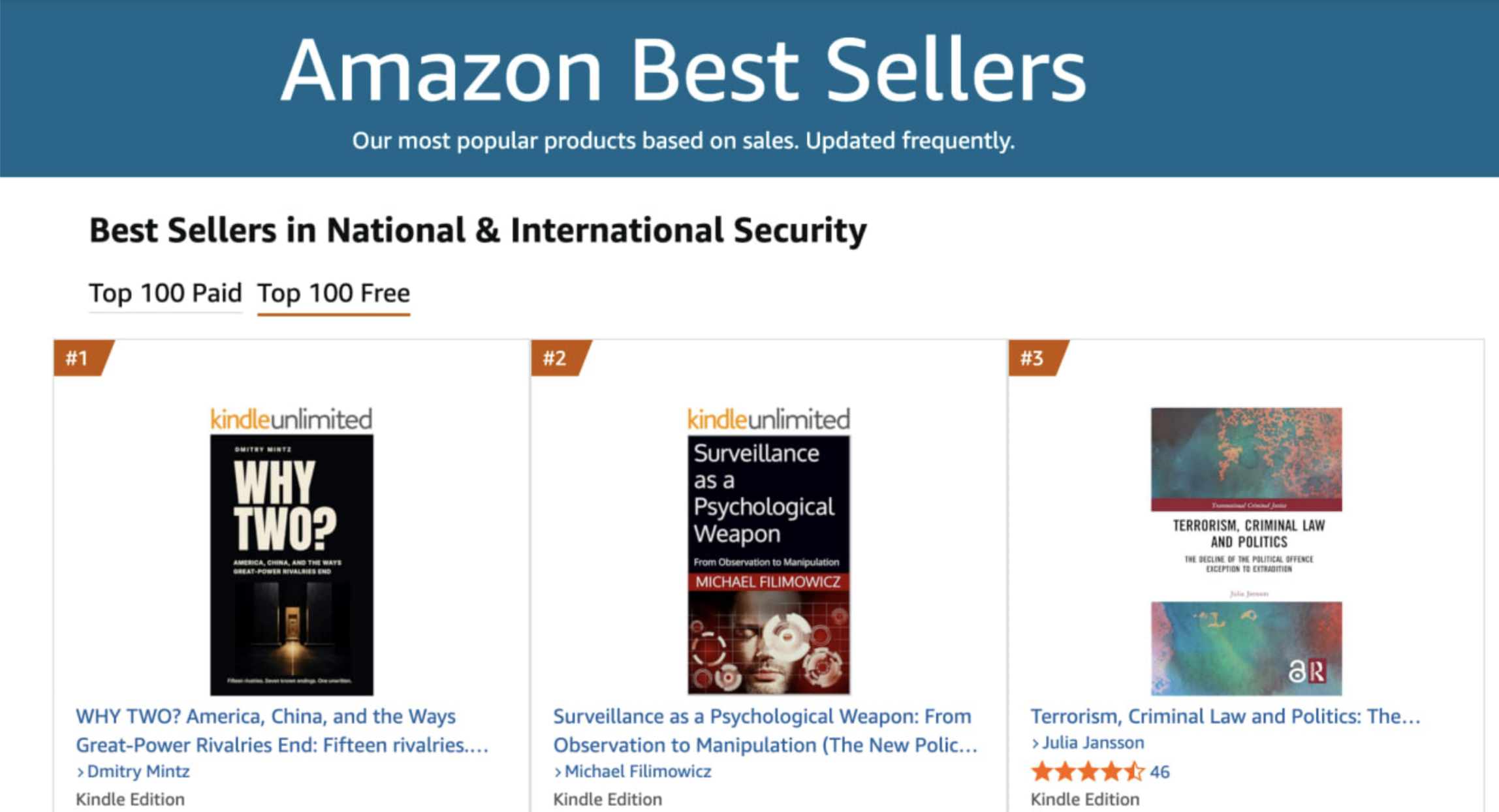
WHY TWO? reached No. 1 in Amazon’s Free National & International Security category during its first Kindle promotion.

Dmitry Mintz, author of WHY TWO? America, China, and the Ways Great-Power Rivalries End.
As U.S.-China competition deepens, Constitution Day raises a different question: what could decades of rivalry do to America itself?
Outside the Archives, that system is dealing with a kind of pressure its framers could not have anticipated: prolonged strategic competition with another great power, reaching well beyond traditional foreign policy.
Competition with China now runs through artificial intelligence, semiconductors, trade, critical minerals, supply chains and national security. Most of the debate looks outward: How powerful will China become? Can the United States keep its advantages? Who wins?
Constitution Day suggests a different question: What could decades of trying to outcompete China do to America itself?
“Great-power rivalries make us look at the other side — what it can do, what it wants, where it is vulnerable,” said writer and strategy consultant Dmitry Mintz. “History makes us look inward too. Long competition tests armies and economies, but it also tests institutions and a system’s ability to correct its own mistakes.”
“That is one reason I wrote WHY TWO? America, China, and the Ways Great-Power Rivalries End. I was less interested in predicting whether America or China ‘wins’ than in asking what happens to great powers over the course of a long rivalry — and how those rivalries actually stop being rivalries.”
Fifteen rivalries, seven endings
In WHY TWO?, published in August, Mintz examines 15 great-power rivalries across 25 centuries, from Athens and Sparta and Rome and Carthage to Britain and Germany and the United States and Soviet Union. He identifies seven recurring forms an ending has taken.
Rome erased Carthage as a rival. Other pairs were displaced by a third power, endured long containment, entered arms races that brought war closer, or saw primacy handed over peacefully. In other cases, internal hollowing or a failure neither side had planned for changed the contest.
None, Mintz argues, is a template for America and China.
One of the book’s most recent cases shows why institutions belong in the discussion. The Cold War did not end on a battlefield. It ended, in part, in the text of a constitution.
The Soviet Constitution formally gave its republics the right to secede. For decades, Communist Party control made that right largely unusable. When the Party lost its constitutional monopoly in 1990, the clause remained and the republics already had institutions capable of acting on it. The U.S. Constitution contains no equivalent exit mechanism.
“History gives forms, not commands,” Mintz said. “It cannot tell us which door the United States and China will reach. What it can do is warn us against imagining there are only two doors — we win or they win.”
Institutions under load
That same theme is built into the book’s structure. The historical chapters are interwoven with a single day: July 4, 2026, America’s 250th anniversary, followed hour by hour as institutions in Washington respond to heat, crowds, security restrictions, a storm and an evacuation.
In a 4½-star review, Wrote a Book called that device “a working demonstration of institutions under load” and described WHY TWO? as “the most intellectually disciplined book we have been sent this year, and one of the best written.”
The Kindle edition of WHY TWO? will be free on Amazon Sept. 16–17, including Constitution Day. The book deliberately leaves its fifteenth rivalry — America and China — unfinished.
The question it raises for Constitution Day is not only whether the United States can withstand competition with China, but what kind of United States emerges from decades of competing.
About Dmitry Mintz
Dmitry Mintz is a writer and strategy consultant whose work explores power, institutions, technology and the choices that shape political and economic change. His nonfiction combines historical narrative with strategic analysis, tracing recurring patterns without treating history as a set of rules or predictions. He is the author of WHY TWO? America, China, and the Ways Great-Power Rivalries End and founder of Mr. Mintz.
Lena Mintz
Mr. Mintz
support@mr-mintz.com
Visit us on social media:
LinkedIn
Legal Disclaimer:
EIN Presswire provides this news content "as is" without warranty of any kind. We do not accept any responsibility or liability for the accuracy, content, images, videos, licenses, completeness, legality, or reliability of the information contained in this article. If you have any complaints or copyright issues related to this article, kindly contact the author above.
