
The latest news from Europe
Provided by AGP
In Good Company: What the World Can Learn from a Munich District That Refuses to Stand Still
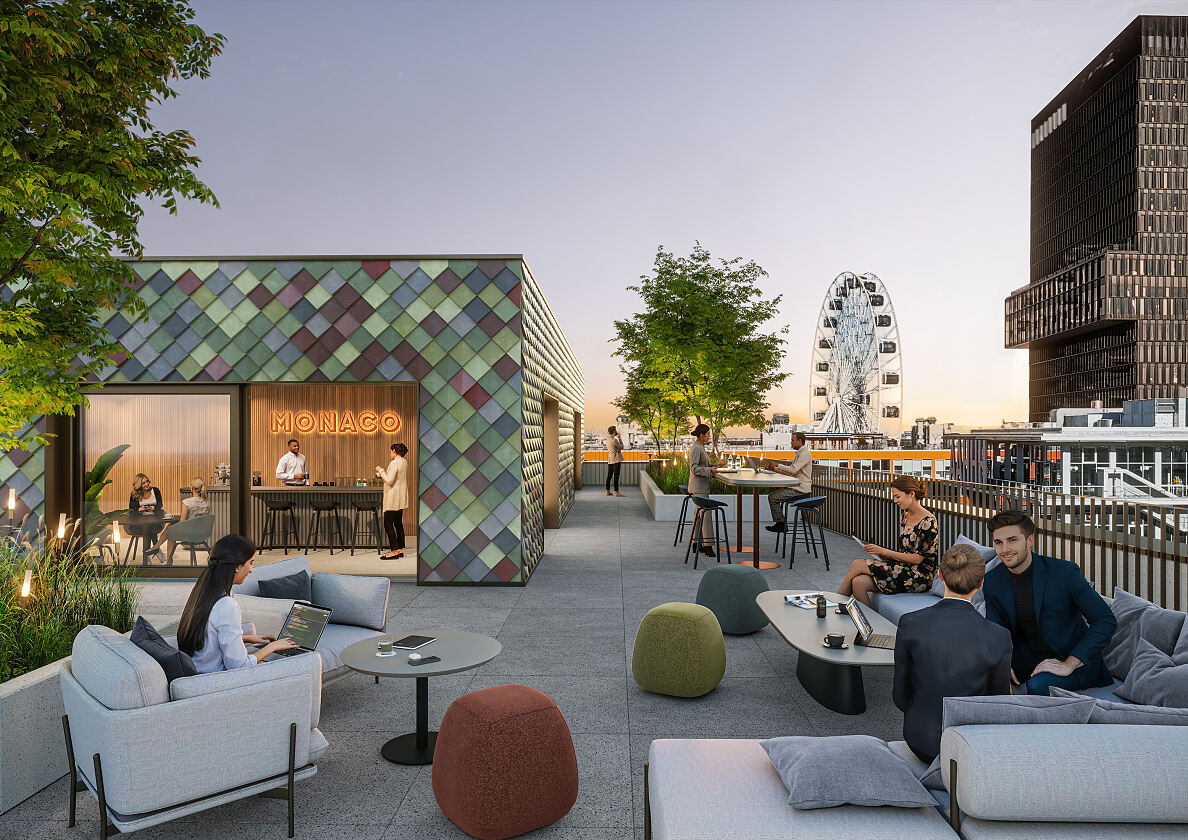
Cradle-to-Cradle becomes a visual highlight
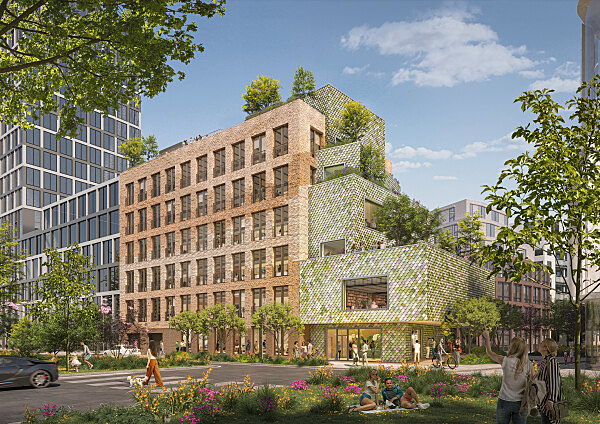
© MVRDV / Rock Capital Group
The Werksviertel is a prime example of reinventing oneself without losing identity — for similar reasons as Copenhagen's Nordhavn or Linz's Tabakfabrik.
With MONACO, we want to build a building that continues to write the spirit of the Werksviertel”
— Andreas Wißmeier, Managing Director of Rock Capital Group
MUNICH, GERMANY, May 5, 2026 /EINPresswire.com/ -- Industrial site, dumpling factory, oil mill, later the Kunstpark Ost and party strip, then Kultfabrik, and today an urban district with offices, culture, gastronomy, and even a Ferris wheel. The site in Munich's east has lived many lives and has been reinventing itself for over 120 years. At the entrance to this sought-after quarter — where more than 7,000 people work today — the Rock Capital Group is currently developing the MONACO office building, a project that continues the character of the district through an international architectural language from the acclaimed firm MVRDV, featuring a spectacular façade made from recycled construction waste. It stands as a prime example of the balancing act of district growth.
"The Werksviertel is not a drawing-board project," says Andreas Wißmeier, Managing Director of Rock Capital Group. "It shows that district development only works when you take the spirit of a place seriously — and don't replace it with arbitrariness." What this means is perhaps best seen on the rooftop of one of the office buildings, where sheep have been living for years. The companies and designers put considerable effort into treating economic, social, and ecological sustainability as equals.
Architecture: Where Munich is Especially Bold
"A key driver is the unusually vibrant architecture which is unusual for Munich," says Udo Peuker of Rock Capital Group, looking at the existing neighbouring buildings. Dutch architects MVRDV have already designed WERK12, a multi-award-winning building with iconic oversized lettering. Aahhh, Oh, Puh can be read on the façade. The award-winning architects go one step further with MONACO. The new-build project translates the ethos of the Werksviertel into a concept that architecturally separates and simultaneously intertwines "Work" and "Play": a compact working block clad in reused, partly century-old clinker bricks meets a playful section featuring colourful Pretty Plastic shingles made from recycled plastic — being used at this scale in Germany for the first time — making the "Cradle to Cradle" principle tangible. Add terraces, balconies, and a pocket garden and an office space is formed that creates spaces for dialogue rather than corridor islands.
"With MONACO, we want to build a building that continues to write the spirit of the Werksviertel," explains Andreas Wißmeier. His colleague Udo Peuker agrees: "The secret to the Werksviertel's success lies above all in the willingness not to erase history, but to transform it." Those who stroll through the district today feel it underfoot: old tracks, rusty rails, scarred façades.
Between Passion and Calculation
Danish architect Mads Mandrup-Hansen from C.F. Møller — which has designed two buildings in the Werksviertel — sees a special power in this authenticity: "The proximity to history and the openness of the new architecture create a vibrant interface between past and future. With our latest design here, we wanted to create a building that feels as though it has always been part of the district — raw, robust, and open to encounter."
Europe-Wide Parallels Are Rare
In Munich, international and local architects and developers have achieved what succeeds in only a handful of places across Europe. In Copenhagen's neo-district Nordhavn, the transformation from container port to a CO₂-neutral quarter with 40,000 jobs and as many residents has been underway since 2009. The concept: a "Five-Minute City" — where every person can reach everything they need within a five-minute walk: work, shopping, leisure, education.
Like the Werksviertel, Nordhavn is a learning urban structure. Between waterways, old silos, and new timber buildings, an atmosphere emerges reminiscent of the Werksviertel — only more maritime, more Nordic. The City of Copenhagen and a state development company share responsibility, combining planning security with public benefit. Historic layers are integrated; older buildings remain part of the new identity. The blend of social diversity, climate-conscious mobility, and cultural openness makes Nordhavn a European model — and a mirror of what is establishing itself in Munich: a district that continually reinvents itself.
A Positive Example: Linz Doing Better Than Its History
The Tabakfabrik, in Linz in Upper Austira has undergone a similar transformation. Where cigarettes were once produced, the creative economy now beats at its heart. Around 250 companies and 1,800 people work in the listed halls, that is more than during the industrial era. The site positions itself as a laboratory and resonance space: a place that allows experiments, tolerates failure, and fosters innovation.
The transformation unfolded gradually, as in Munich, from cultural interim use with concerts, pop-up markets, and exhibitions to the permanent establishment of start-ups, design studios, and educational institutions. What proved decisive was not a master plan, but organic development driven by participation and community. One study describes the Tabakfabrik as an "economic biotope of diversity."
The Principle of Curation
By analogy, the Werksviertel München could be described as a biotope of curators. OTEC, one of the on-site owners, employs dozens of staff who make the place a special experience every day. They plan festivals, readings, studio days, and children's and youth festivals. Three times a year, the portfolio owner invites all tenants also known as "settlers", to gatherings where creatives, corporations, craftspeople, restaurateurs, and the diverse cultural and social institutions meet.
For many people on site, the Werksviertel contains a grain of philosophy — in the Socratic sense of the art of living. The question of what constitutes a good life runs like a guiding thread through the work of the district. It is less about perfection or plan fulfillment than about discovery, experience, failure, and beginning again. In other words, precisely what the ancient Greeks described as Eudaimonia: the flourishing life.
A District That Lives and Breathes
At a time when many urban districts resemble polished stage sets, the Munich Werksviertel remains — even in 2026 and despite its new builds — a breathing organism. While other areas have struggled since the pandemic, the Werksviertel is livelier than ever. Cafés are full, events are sold out, companies use rooftop terraces as meeting spaces. Art and commerce coexist in dialogue. According to estate agents, this aligns with the needs of many businesses. "Among the briefs we handle, we see a clear shift in requirements — away from mere accessibility for employees and toward vibrant districts with added value. The Werksviertel, as a 24-hour quarter, continues to rank highly among companies," says Martin Riedl, Managing Director of IGENUS Immobilien.
Companies benefit almost incidentally from the vitality and attractiveness of the location. "The office attendance rate among several tenants here is the highest in Germany," Andreas Wißmeier of Rock Capital Group quotes several other owners who already lease space on site.
Kai Oppel
SCRIVO Communications
+ +491786150154
email us here
Legal Disclaimer:
EIN Presswire provides this news content "as is" without warranty of any kind. We do not accept any responsibility or liability for the accuracy, content, images, videos, licenses, completeness, legality, or reliability of the information contained in this article. If you have any complaints or copyright issues related to this article, kindly contact the author above.
