

Fortified Foods Market Value Growth Driven by Nutrition Demand and Health Awareness
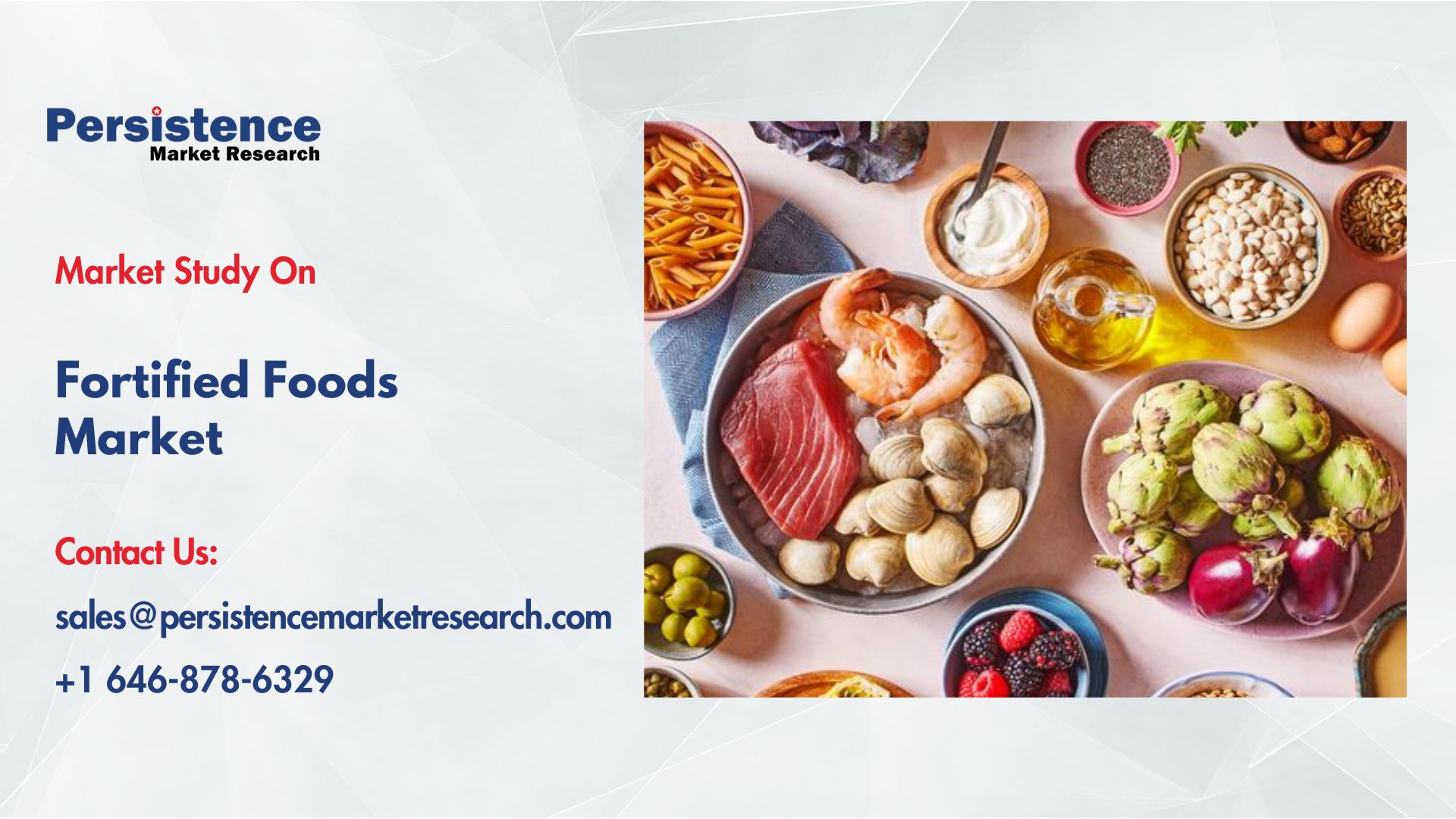
fortified foods market to grow from US$163.1 Bn in 2026 to US$268.8 Bn by 2033, registering a 7.4% CAGR driven by nutrition and health awareness
BRENTFORD, ENGLAND, UNITED KINGDOM, January 21, 2026 /EINPresswire.com/ -- The global fortified foods market is poised for strong and sustained expansion, driven by increasing consumer awareness of nutrition, rising prevalence of micronutrient deficiencies, and growing demand for functional and value-added food products. According to industry estimates, the global fortified foods market size is expected to grow from US$ 163.1 billion in 2026 to approximately US$ 268.8 billion by 2033, reflecting a compound annual growth rate (CAGR) of 7.4% during the forecast period from 2026 to 2033.
Fortified foods, which are enhanced with essential vitamins, minerals, and other nutrients, have become a critical component of modern diets across both developed and developing economies. Governments, healthcare organizations, and food manufacturers are increasingly promoting food fortification as a cost-effective strategy to address malnutrition, improve public health outcomes, and support overall well-being. As consumers become more proactive about preventive healthcare and nutrition, fortified foods are gaining widespread acceptance across diverse demographic groups.
Get Your FREE Sample Report Instantly – Click Now: https://www.persistencemarketresearch.com/samples/33929
Key Factors Driving Market Growth
One of the primary drivers of the global fortified foods market is the increasing global burden of micronutrient deficiencies, often referred to as “hidden hunger.” Deficiencies in iron, iodine, vitamin A, vitamin D, and other essential nutrients continue to affect large segments of the population, particularly in low- and middle-income countries. Fortified foods offer a scalable and efficient solution to address these deficiencies without requiring significant changes in dietary habits.
Rising health consciousness among consumers is another major growth catalyst. Modern consumers are increasingly seeking foods that offer functional benefits beyond basic nutrition, including improved immunity, bone health, cognitive function, and energy levels. This trend is particularly pronounced among aging populations, working professionals, and health-focused millennials, all of whom are driving demand for fortified staples, beverages, and convenience foods.
Government initiatives and regulatory support are also playing a pivotal role in market expansion. Mandatory fortification programs for staples such as flour, salt, milk, and edible oils have been implemented in several countries to improve population-level nutrition. These policies not only increase market penetration but also create long-term demand stability for fortified food products.
Segmentation Analysis
By Micronutrients
• Vitamins
o Vitamin A
o Vitamin B
o Vitamin C
o Vitamin D
o Other Vitamins
• Minerals
o Calcium
o Iron
o Zinc
o Iodine
o Other Minerals
• Folic Acid
• Others
By Food Products
• Flours
• Cereals & Pulses
• Salt
• Edible Oils
• Milk
• Others
By Technology
• Drying
• Extrusion
• Coating & Encapsulation
• Others
By Distribution Channel
• B2B
• B2C
o Hypermarkets/Supermarkets
o Convenience Stores
o Specialty Stores
o Online retail
o Others
Need Tailored Insights? Request Customization Now: https://www.persistencemarketresearch.com/request-customization/33929
Regional Insights
Leading Regional Markets
From a regional perspective, North America holds a prominent position in the global fortified foods market, driven by high consumer awareness, advanced food processing infrastructure, and strong demand for functional and health-oriented food products. The presence of leading food manufacturers and robust regulatory frameworks further supports market growth in the region.
Europe represents another major market, characterized by stringent food safety standards, growing demand for clean-label and fortified products, and increasing focus on preventive healthcare. Countries across Western and Northern Europe are witnessing rising adoption of fortified dairy products, cereals, and plant-based alternatives.
Fastest-Growing Region
Asia Pacific is expected to remain the fastest-growing region in the fortified foods market during the forecast period. Rapid urbanization, expanding middle-class populations, and increasing awareness of nutrition are driving strong demand across both urban and semi-urban areas. Government mandates for staple food fortification, coupled with growing participation from multinational and regional food manufacturers, are further accelerating market growth in the region.
Unique Features and Innovations in the Market
The fortified foods market is undergoing significant transformation, driven by innovation in ingredients, processing technologies, and product formulation. Modern fortification techniques allow manufacturers to incorporate nutrients with minimal impact on taste, color, and texture, thereby enhancing consumer acceptance. Microencapsulation and controlled-release technologies are increasingly being used to improve nutrient stability and bioavailability.
Digital technologies are also reshaping the market landscape. Artificial intelligence (AI) is being used to analyze consumer preferences and optimize product formulations, while Internet of Things (IoT) solutions support quality control and traceability across production and distribution processes. Advanced data analytics enable manufacturers to identify nutrient gaps and develop targeted fortified products for specific demographic groups.
Market Highlights
The adoption of fortified foods is being driven by a convergence of health, economic, and regulatory factors. For consumers, fortified foods offer a convenient and accessible way to meet daily nutritional requirements without altering eating habits. For governments and public health organizations, food fortification represents a cost-effective strategy to address widespread nutrient deficiencies and reduce long-term healthcare costs.
Regulatory support plays a crucial role in market development. Mandatory and voluntary fortification programs, labeling requirements, and quality standards are shaping product development and market entry strategies. Compliance with these regulations enhances consumer trust and ensures consistent product quality across markets.
Secure Your Full Report – Proceed to Checkout: https://www.persistencemarketresearch.com/checkout/33929
Key Players and Competitive Landscape
• Nestlé S.A.
• BASF SE
• General Mills
• Tata Chemicals Limited
• Unilever PLC
• Cargill Incorporated
• Danone
• Bunge Limited
• Unilever PLC
• Koninklijke DSM NV
• Stern-Wywiol GmbH & Co.KG
Explore the Latest Trending Research Reports:
Vacuum Salt Market:The global vacuum salt market can be expected to expand at a value based CAGR of 5.1% and show an increase in revenue from US$ 8,421.1 Mn in 2025 to around US$ 11,928.6 Mn by 2032
Bottled Deep Ocean Water Market: The global bottled deep ocean water market can be expected to expand at a value based CAGR of 8.0% and show an increase in revenue from US$ 1,440.5 Mn in 2025 to around US$ 2,468.8 Mn by 2032
Aishwarya Doiphode
Persistence Market Research
+1 646-878-6329
email us here
Visit us on social media:
LinkedIn
Instagram
YouTube
X
Legal Disclaimer:
EIN Presswire provides this news content "as is" without warranty of any kind. We do not accept any responsibility or liability for the accuracy, content, images, videos, licenses, completeness, legality, or reliability of the information contained in this article. If you have any complaints or copyright issues related to this article, kindly contact the author above.
