

Artificial Intelligence (AI) In Predictive Toxicology Market In 2029
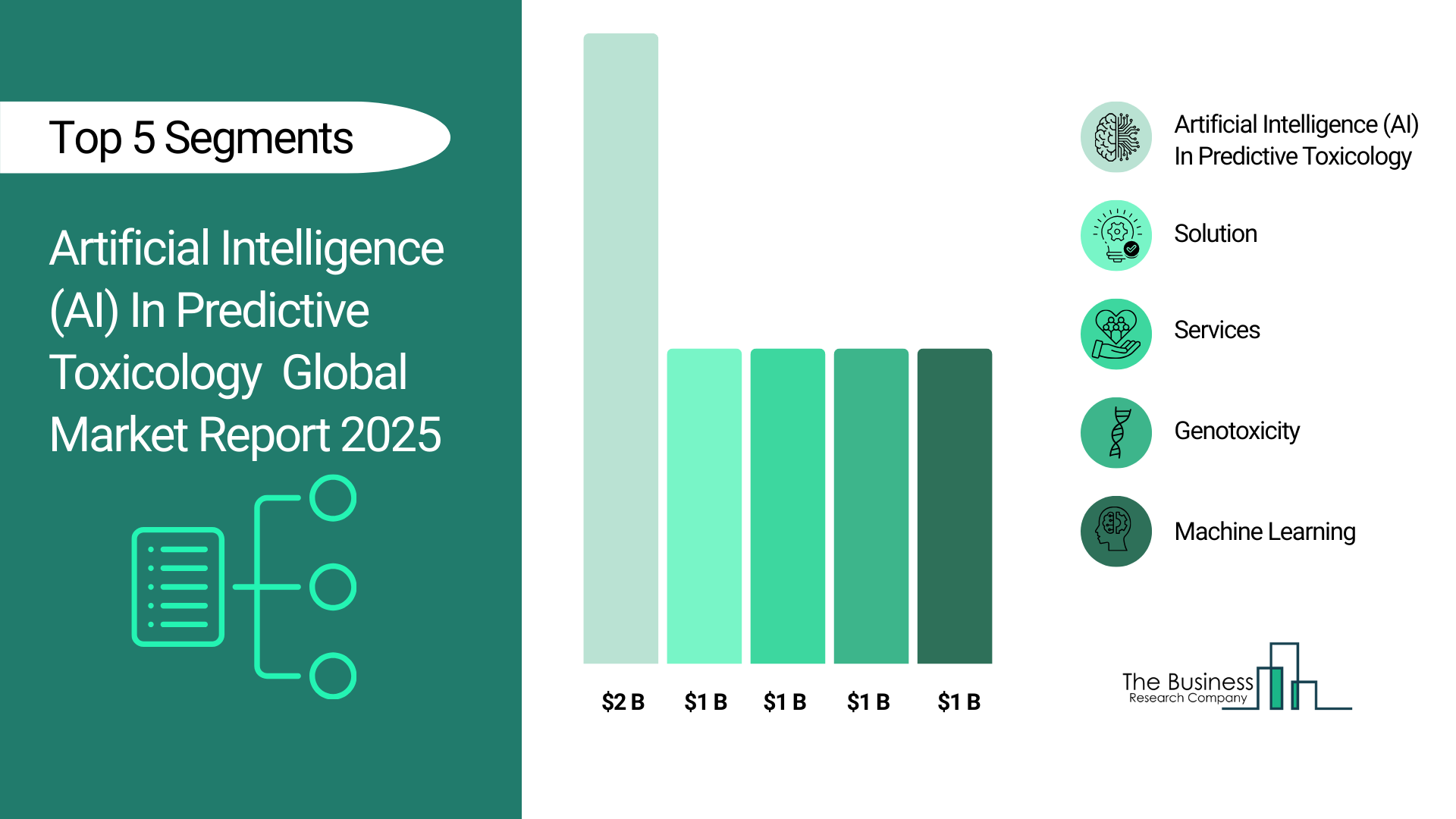
Artificial Intelligence (AI) In Predictive Toxicology Market Growth
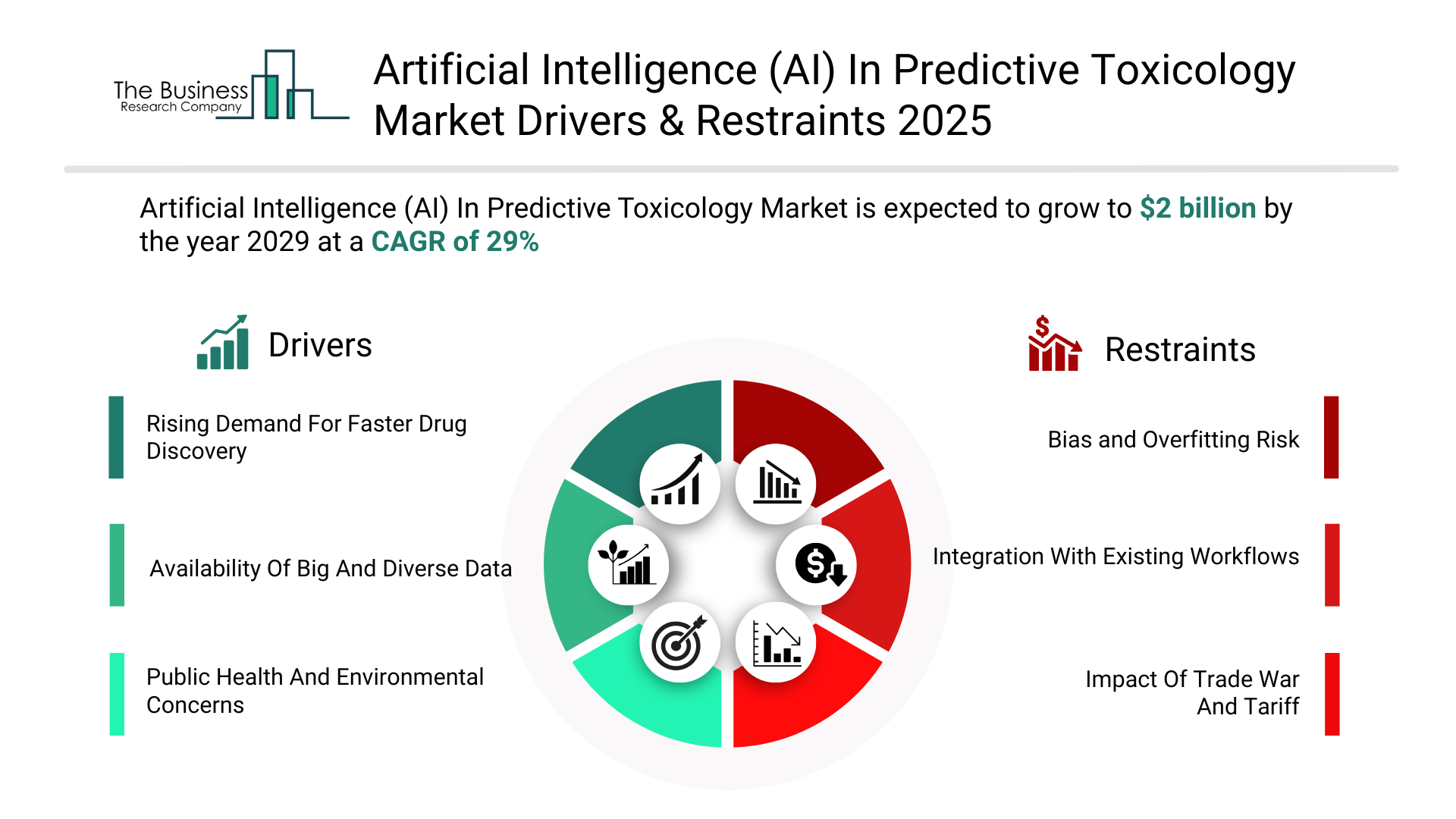
Artificial Intelligence (AI) In Predictive Toxicology Market Forecast
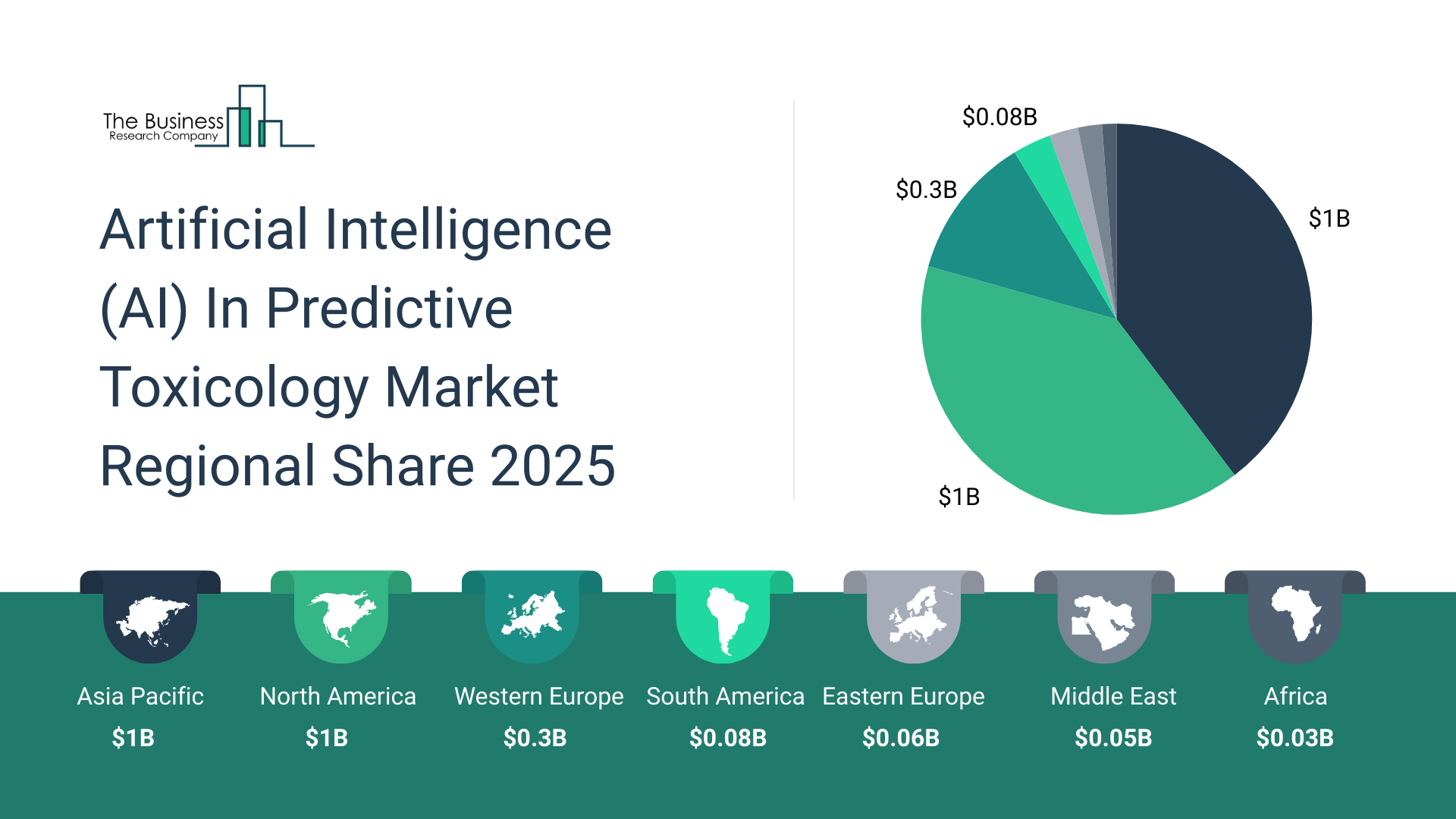
Artificial Intelligence (AI) In Predictive Toxicology Market Share
The Business Research Company’s Artificial Intelligence (AI) In Predictive Toxicology Global Market Report 2025 - Market Size, Trends, And Forecast 2025-2034
LONDON, GREATER LONDON, UNITED KINGDOM, December 3, 2025 /EINPresswire.com/ -- Get 20% Off All Global Market Reports With Code ONLINE20 – Stay Ahead Of Trade Shifts, Macroeconomic Trends, And Industry Disruptors
Artificial Intelligence (AI) In Predictive Toxicology Market to Surpass $2 billion in 2029. In comparison, the AI In Pharma market, which is considered as its parent market, is expected to be approximately $9 billion by 2029, with artificial intelligence (AI) in predictive toxicology to represent around 21.5% of the parent market. Within the broader information technology industry, which is expected to be $13 trillion by 2029, the artificial intelligence (AI) in predictive toxicology market is estimated to account for nearly 0.01% of the total market value.
Which Will Be the Biggest Region in the Artificial Intelligence (AI) In Predictive Toxicology Market in 2029?
North America will be the largest region in the artificial intelligence (AI) in predictive toxicology market in 2029, valued at $626 million. The market is expected to grow from $199 million in 2024 at a compound annual growth rate (CAGR) of 26%. The exponential growth can be attributed to the availability of big and diverse data in toxicology rising proliferation of internet of things (IoT) and connected devices and launch of new product.
Which Will Be The Largest Country In The Global Artificial Intelligence (AI) In Predictive Toxicology Market In 2029?
The USA will be the largest country in the artificial intelligence (AI) in predictive toxicology market in 2029, valued at $557 million. The market is expected to grow from $175 million in 2024 at a compound annual growth rate (CAGR) of 26%. The exponential growth can be attributed to the availability of big and diverse data in toxicology and government initiatives.
Request a free sample of the Artificial Intelligence (AI) In Predictive Toxicology Market report:
https://www.thebusinessresearchcompany.com/sample_request?id=14253&type=smp
What will be Largest Segment in the Artificial Intelligence (AI) In Predictive Toxicology Market in 2029?
The artificial intelligence (AI) in predictive toxicology market is segmented by component into solution and services. The solution market will be the largest segment of the artificial intelligence (AI) in predictive toxicology market segmented by component, accounting for 64% or $1,137.65 million of the total in 2029. The solution market will be supported by the rising demand for advanced software platforms capable of predicting toxicological profiles of chemical compounds, increasing adoption of machine learning and deep learning algorithms to enhance accuracy in toxicity prediction, growing integration of AI-driven predictive models with in vitro and in silico testing frameworks, advancements in computational toxicology enabling faster and more reliable hazard assessments, rising need for reducing animal testing in drug and chemical safety evaluation, and increasing investments by pharmaceutical and chemical companies in AI-based predictive toxicology solutions for safer and more efficient product development.
The artificial intelligence (AI) in predictive toxicology market is segmented by technology into machine learning, natural language processing, computer vision, other technologies. The machine learning market will be the largest segment of the artificial intelligence (AI) in predictive toxicology market segmented by technology, accounting for 53% or $947 million of the total in 2029. The machine learning market will be supported by the increasing use of large-scale biological and chemical datasets to predict toxicity profiles, growing adoption of machine learning (ML) algorithms for in silico toxicity screening, rising integration of ML models with cheminformatics and bioinformatics platforms, advancements in predictive modeling techniques enabling higher accuracy in toxicity prediction, increasing demand for faster and cost-effective alternatives to animal testing, and expanding investments by pharmaceutical and chemical companies in ML-driven predictive toxicology solutions to enhance drug safety and regulatory compliance.
The artificial intelligence (AI) in predictive toxicology market is segmented by toxicity endpoints into genotoxicity, hepatotoxicity, neurotoxicity, cardiotoxicity and other toxicity endpoints. The genotoxicity market will be the largest segment of the artificial intelligence (AI) in predictive toxicology market segmented by toxicity endpoints, accounting for 37% or $667 million of the total in 2029. The genotoxicity market will be supported by the increasing need to identify DNA (deoxyribonucleic acid)-damaging compounds early in drug development, growing adoption of AI models to predict genotoxic effects from chemical structures and biological data, integration of machine learning and computer vision techniques to analyse in vitro and in vivo genotoxicity assay results, advancements in predictive algorithms enabling higher accuracy and reduced false positives, rising demand for rapid and cost-effective alternatives to traditional genotoxicity testing, and increasing investments by pharmaceutical and chemical companies in AI-driven genotoxicity prediction to enhance safety assessment and regulatory compliance. These are among the most common and serious reasons for drug candidate failure and withdrawal from the market. Accurate prediction here has immense value.
The artificial intelligence (AI) in predictive toxicology market is segmented by end user into pharmaceutical and biotechnology companies, chemical and cosmetics, contract research organizations and other end users. The pharmaceutical and biotechnology companies market will be the largest segment of the artificial intelligence (AI) in predictive toxicology market segmented by end user, accounting for 58% or $1,031 million of the total in 2029. The pharmaceutical and biotechnology companies market will be supported by the growing need to accelerate drug discovery and development while minimizing safety risks, increasing adoption of AI and machine learning models to predict toxicity profiles early in the pipeline, integration of AI-driven predictive toxicology tools with high-throughput screening, omics data, and electronic lab notebooks, rising demand for cost-effective and faster alternatives to traditional animal testing, advancements in computational algorithms enabling more accurate and reliable toxicity predictions, and expanding investments by pharmaceutical and biotechnology firms in AI-based platforms to enhance drug safety, reduce late-stage failures, and ensure regulatory compliance. The extreme cost of drug failure in late-stage clinical trials (often hundreds of millions of dollars) due to toxicity issues creates a massive financial incentive to adopt AI for early and accurate toxicity prediction.
What is the expected CAGR for the Artificial Intelligence (AI) In Predictive Toxicology Market leading up to 2029?
The expected CAGR for the artificial intelligence (AI) in predictive toxicology market leading up to 2029 is 29%.
What Will Be The Growth Driving Factors In The Global Artificial Intelligence (AI) In Predictive Toxicology Market In The Forecast Period?
The rapid growth of the global artificial intelligence (AI) in predictive toxicology market leading up to 2029 will be driven by the following key factors that are expected to reshape early-stage toxicity screening, significantly reducing R&D costs and late-stage drug attrition worldwide.
Rising Demand For Faster Drug Discovery And Development - The rising demand for faster drug discovery and development will become a key driver of growth in the artificial intelligence (AI) in predictive toxicology market by 2029. Pharmaceutical companies are under pressure to shorten the timelines and reduce the costs associated with bringing new drugs to market. AI-driven predictive toxicology solutions enable early identification of potential safety concerns, allowing for more informed decision-making and prioritization of drug candidates. By 2025, it is estimated that AI will drive new drug discoveries, cutting costs and accelerating personalized treatments. This shift towards AI integration in the drug development process not only enhances efficiency but also improves the success rates of clinical trials, thereby addressing the industry's need for expedited and cost-effective drug development. As a result, the rising demand for faster drug discovery and development is anticipated to contributing to a 1.5% annual growth in the market.
Availability Of Big And Diverse Data In Toxicology - The availability of big and diverse data in toxicology will emerge as a major factor driving the expansion of the market by 2029. Large datasets from in vitro and in vivo studies, chemical libraries and clinical trials provide AI models with the breadth and depth needed to accurately predict toxicological outcomes. Access to such comprehensive data enables AI algorithms to detect complex patterns, improve prediction reliability and enhance model generalizability across different chemical classes and biological systems. As more diverse and extensive datasets become available, AI-powered predictive toxicology solutions will increasingly support drug development, regulatory compliance and environmental safety assessments, thereby driving market growth. Consequently, the availability of big and diverse data in toxicology is projected to contributing to a 1.0% annual growth in the market.
Public Health And Environmental Concerns - The public health and environmental concerns will serve as a key growth catalyst for the market by 2029. Increasing awareness of the potential risks posed by chemicals and environmental pollutants is driving demand for safer and more accurate toxicity assessments. AI-enabled predictive toxicology platforms allow researchers to rapidly analyze complex datasets, identify hazardous compounds and model potential health impacts without relying heavily on traditional animal testing. Moreover, these technologies support regulatory compliance by providing data-driven insights that align with evolving safety standards and environmental protection guidelines. As organizations prioritize human health and environmental sustainability, the adoption of artificial intelligence (AI) in predictive toxicology is expected to increase, thereby driving market growth. Therefore, this public health and environmental concerns is projected to supporting to a 0.8% annual growth in the market.
Rising Clinical Trails - The rising clinical trials will become a significant driver contributing to the growth of the market by 2029 AI enables rapid and accurate prediction of toxic effects in new drug compounds, significantly reducing the time and cost associated with traditional animal testing and laboratory studies. As clinical trials increase, the demand for AI solutions capable of analysing extensive toxicology datasets and predicting adverse reactions continues to rise. By leveraging machine learning algorithms, AI enhances drug safety assessments, identifies potentially toxic chemicals, and supports faster, data-driven decision-making in drug development and regulatory approval processes. Consequently, the rising clinical trials is projected to contributing to a 0.5% annual growth in the market.
Access the detailed Artificial Intelligence (AI) In Predictive Toxicology Market report here:
https://www.thebusinessresearchcompany.com/report/artificial-intelligence-ai-in-predictive-toxicology-global-market-report
What Are The Key Growth Opportunities In The Artificial Intelligence (AI) In Predictive Toxicology Market in 2029?
The most significant growth opportunities are anticipated in the artificial intelligence (AI) in predictive toxicology solution market, machine learning in artificial intelligence (AI) in predictive toxicology market, artificial intelligence (AI) in predictive genotoxicity market and artificial intelligence (AI) in predictive toxicology for pharmaceutical and biotechnology companies market. Collectively, these segments are projected to contribute over $3 billion in market value by 2029, driven by advances in computational modelling, integration of multi-omics and high-throughput screening data, and growing regulatory and industry pressure to reduce late-stage drug failures and animal testing. This surge reflects the accelerating adoption of AI and machine-learning tools that deliver earlier, mechanistic safety signals, faster in-silico risk assessments, and more cost-effective candidate triage, improving decision-making across discovery, preclinical development, and regulatory submission workflows, and thereby fueling transformative growth within the broader AI in pharma industry.
The artificial intelligence (AI) in predictive toxicology solution market is projected to grow by $795 million, artificial intelligence (AI) in predictive toxicology for pharmaceutical and biotechnology companies by $786 million, the machine learning in artificial intelligence (AI) in predictive toxicology market by $712 million and the artificial intelligence (AI) in predictive genotoxicity market by $503 million over the next five years from 2024 to 2029.
Learn More About The Business Research Company
The Business Research Company (www.thebusinessresearchcompany.com) is a leading market intelligence firm renowned for its expertise in company, market, and consumer research. We have published over 17,500 reports across 27 industries and 60+ geographies. Our research is powered by 1,500,000 datasets, extensive secondary research, and exclusive insights from interviews with industry leaders.
We provide continuous and custom research services, offering a range of specialized packages tailored to your needs, including Market Entry Research Package, Competitor Tracking Package, Supplier & Distributor Package and much more.
Disclaimer: Please note that the findings, conclusions and recommendations that TBRC Business Research Pvt Ltd delivers are based on information gathered in good faith from both primary and secondary sources, whose accuracy we are not always in a position to guarantee. As such TBRC Business Research Pvt Ltd can accept no liability whatever for actions taken based on any information that may subsequently prove to be incorrect. Analysis and findings included in TBRC reports and presentations are our estimates, opinions and are not intended as statements of fact or investment guidance.
Contact Us:
The Business Research Company
Americas +1 310-496-7795
Europe +44 7882 955267
Asia & Others +44 7882 955267 & +91 8897263534
Email: info@tbrc.info
Follow Us On:
LinkedIn: https://in.linkedin.com/company/the-business-research-company
Oliver Guirdham
The Business Research Company
+44 7882 955267
info@tbrc.info
Visit us on social media:
LinkedIn
Facebook
X
Legal Disclaimer:
EIN Presswire provides this news content "as is" without warranty of any kind. We do not accept any responsibility or liability for the accuracy, content, images, videos, licenses, completeness, legality, or reliability of the information contained in this article. If you have any complaints or copyright issues related to this article, kindly contact the author above.
